
Publications
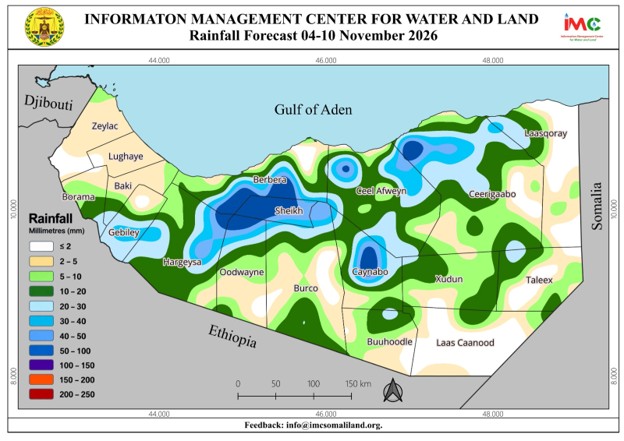
Somaliland Weekly Weather Forecast: Light Rainfall Expected Across Most Regions | 04–10 November 2026
Nov. 4, 2026
he Somaliland Information Management Center (IMC) for Water and Land, in collaboration with the Ministry of Agriculture Development and with technical support from FAO SWALIM, has released the Weekly Weather Forecast for 04–10 November 2026. The forecast indicates light rainfall across most parts of Somaliland, with moderate rainfall of 50–100 mm expected in localized areas of northeastern Hargeisa, southern Berbera, western Sheikh, central Caynabo and northwestern Ceerigaabo. Other areas are expected to receive light rainfall ranging from less than 20 mm to 50 mm, while predominantly dry conditions are anticipated across Laascanood district in Sool and most parts of Laasqorey district in Sanaag. The anticipated rainfall is expected to improve soil moisture, support pasture regeneration and vegetation growth, and replenish community water sources, including berkads, hafir dams and shallow wells. These conditions may benefit livestock grazing, livestock productivity and rain-fed agricultural activities. However, cloudy and rainy conditions may temporarily affect solar-powered water pumping systems, while wet and muddy conditions could disrupt livestock movement, market access and agricultural transportation. Communities in flood-prone areas are encouraged to remain alert to potential increases in water levels in seasonal streams and drainage channels. Continued monitoring of rainfall distribution, water availability and pasture conditions remains important to support climate-informed planning and preparedness across Somaliland.
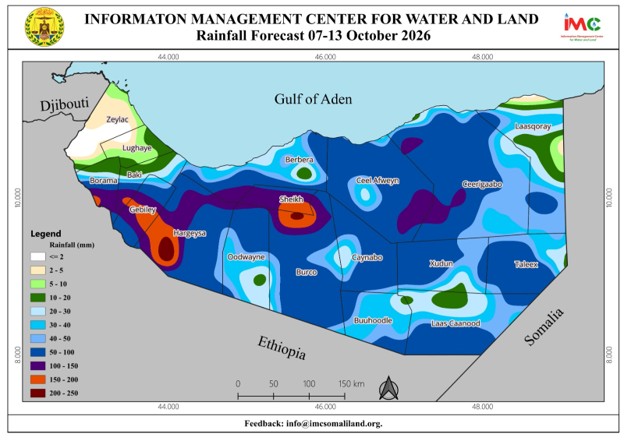
Somaliland Weekly Weather Forecast: Heavy to Very Heavy Rainfall Expected in Localized Areas | 07–13 October 2026
Oct. 7, 2026
The Somaliland Information Management Center (IMC), in collaboration with the Ministry of Agriculture Development and with technical support from FAO SWALIM, has released the Weekly Weather Forecast for 07–13 October 2026. The forecast indicates moderate to very heavy rainfall across several parts of Somaliland, with the highest rainfall totals expected in localized areas of Borama, Gabiley, Hargeisa, Sheikh and northern Burco. Very heavy cumulative rainfall of 150–250 mm is forecast in parts of southern Borama, central Gabiley, central and southwestern Hargeisa, southeastern Sheikh and northern Burco. Heavy rainfall of 100–150 mm is expected in additional areas, while moderate rainfall of 50–100 mm is forecast across wider parts of the country. The expected rainfall may improve water availability, pasture conditions, soil moisture and recharge of shallow water sources, but intense rainfall could also increase the risk of flash flooding, surface runoff, erosion, temporary flooding, infrastructure damage and transport disruption. Communities in flood-prone areas are advised to avoid crossing flooded roads, seasonal rivers and drainage channels during and immediately after heavy rainfall. Farmers, pastoralists, drivers, water-resource managers and local authorities are encouraged to take appropriate precautions and closely monitor updated forecasts and early-warning information throughout the week.
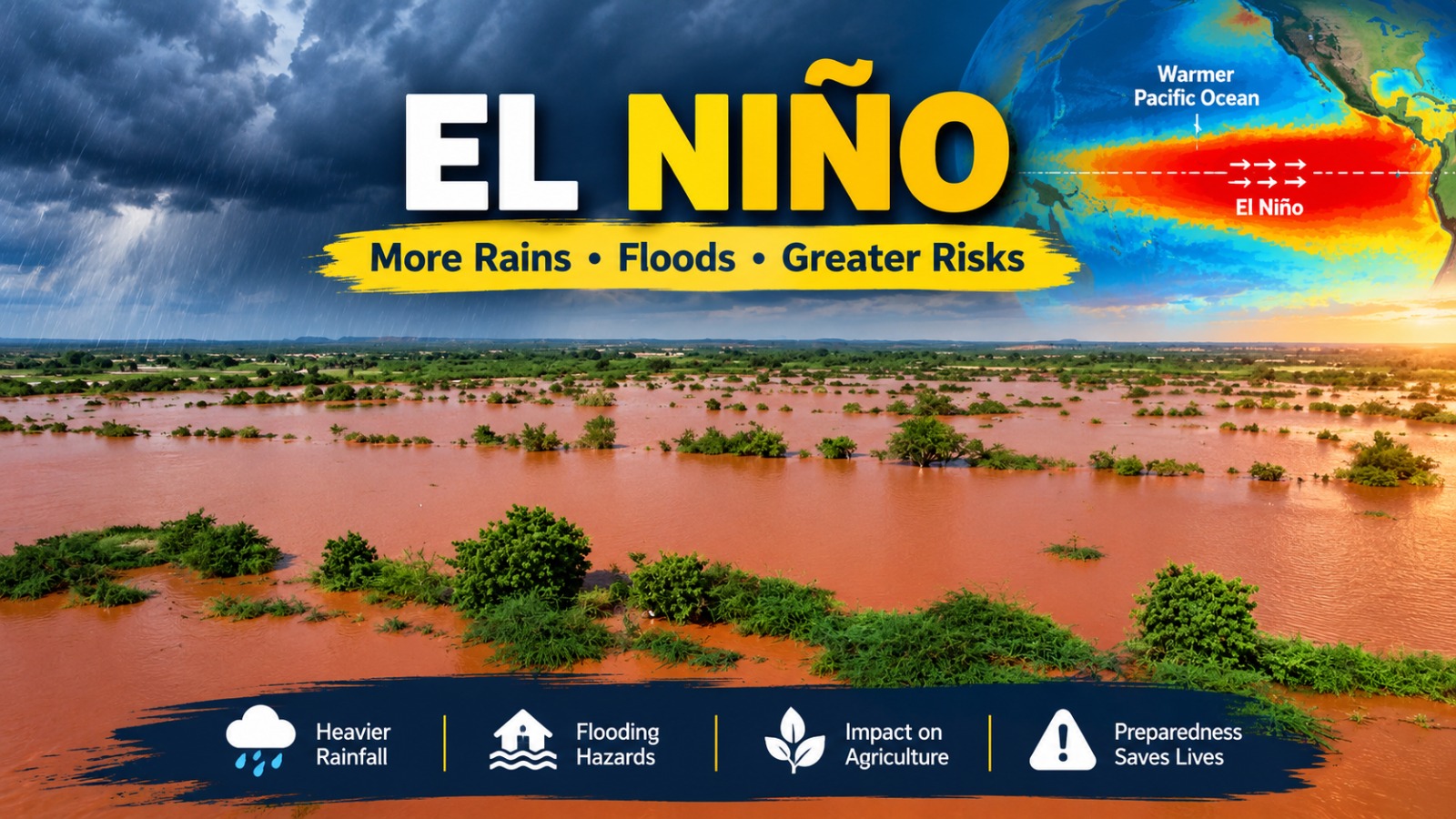
Somaliland El Niño 2026–2027: Climate Statement and Early Warning Advisory
Oct. 4, 2026
The Somaliland Information Management Center for Water and Land (IMC) has issued the Somaliland El Niño 2026–2027 Climate Statement and Early Warning Advisory to support early warning dissemination, humanitarian preparedness, and disaster risk management planning across Somaliland. The ongoing El Niño event is expected to strengthen toward the end of 2026 and may reinforce rainfall activity during the Deyr (October–December) season. This could contribute to improved water availability, pasture and agricultural conditions in some areas, while also increasing the potential for heavy rainfall, flash flooding, water contamination, disease outbreaks, transport disruption and environmental degradation. The advisory highlights potential impacts across water resources, livestock and agriculture, disaster risk management, health and WASH, transport and infrastructure, and the environment. Government institutions, humanitarian organizations, and communities are encouraged to strengthen preparedness, particularly in flood-prone areas, around critical water infrastructure, agricultural and livestock areas, health facilities, and transport routes. IMC will continue providing regular weekly and monthly updates on rainfall onset, distribution and cessation to support timely, evidence-based decision-making as the season progresses.