
Publications
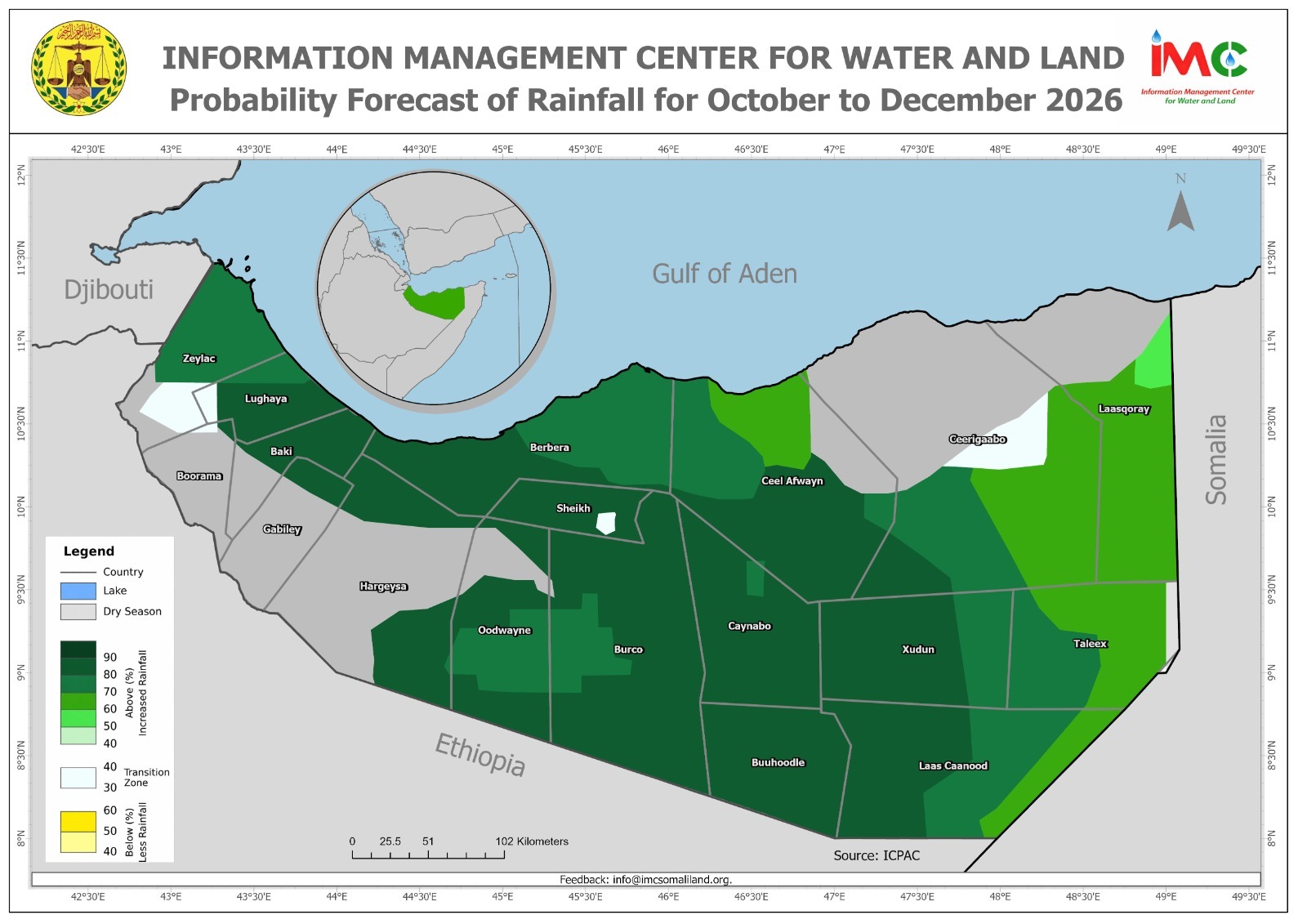
Somaliland Probabilistic Deyr (October–December) 2026 Seasonal Rainfall Forecast.
Sept. 23, 2026
The Information Management Center (IMC) for Water and Land has released the Somaliland Probabilistic Deyr (October–December) 2026 Seasonal Rainfall Forecast. The outlook indicates a 60–90% likelihood of above-normal rainfall across most parts of Somaliland, alongside above-normal temperatures during the Deyr season. Some areas, including parts of Buuhoodle, Caynabo, Burco, Sheikh and Lughaya districts, have approximately a 90% probability of above-normal rainfall. Rainfall onset is expected as early as the third week of September across parts of Sool, Togdheer and Sanaag, before gradually spreading westward, with generally fair-to-good seasonal distribution in rainfall-receiving areas. The outlook presents opportunities for improved crop production, pasture regeneration, livestock conditions, water availability and groundwater recharge, while also increasing risks associated with flash flooding, erosion, water contamination, livestock and crop diseases, infrastructure damage and access constraints. Stakeholders and communities are encouraged to strengthen preparedness, rainwater harvesting, flood-risk management, disease surveillance, soil and water conservation, and the use of seasonal and weekly climate information for decision-making.
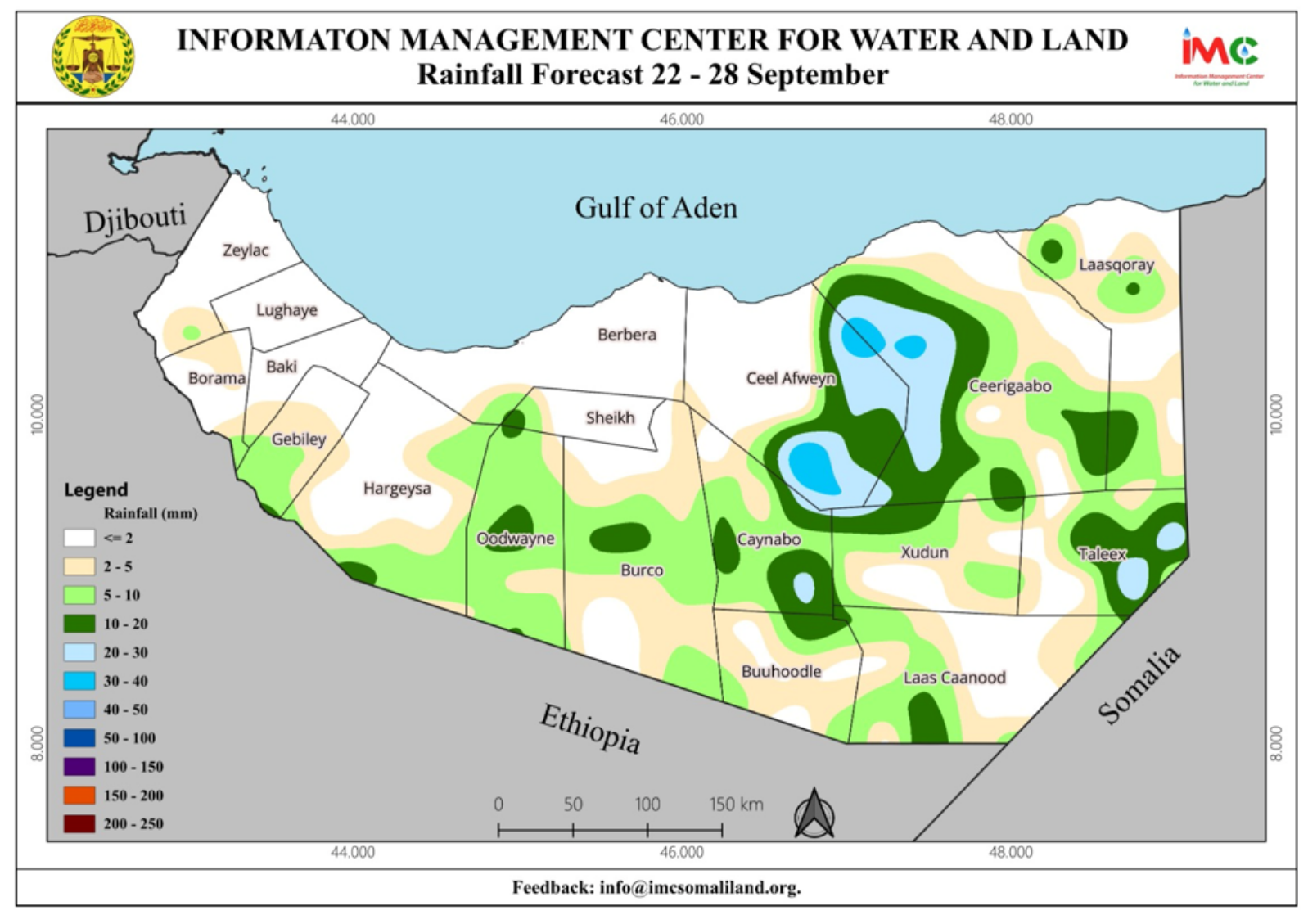
Somaliland Weekly Weather Forecast: Localized Rainfall Expected Across Central and Eastern Areas | 22–28 September 2026
Sept. 23, 2026
The Information Management Center (IMC) for Water and Land has released the Somaliland Weekly Weather Forecast, valid from 22 to 28 September 2026. Light rainfall is anticipated in localized areas of Maroodijeex, Togdheer, Sool, Sanaag, and Saaxil, including parts of Gabiley, Hargeisa, Oodweyne, Burco, Buuhoodle, Caynabo, Xudun, Taleex, and Laascanood. Meanwhile, predominantly dry conditions are expected across western coastal areas, particularly much of Awdal and Saaxil. The anticipated rainfall may provide localized improvements in soil moisture, pasture regeneration, and surface water availability. However, rainfall distribution is expected to remain uneven. Localized intense showers could also generate flash runoff, erosion, temporary flooding in low-lying areas, and disruption of unpaved roads. Communities, farmers, pastoralists, and relevant authorities are encouraged to continue monitoring weather information as Somaliland moves toward the wetter OND/Deyr period.

Somaliland Weekly Weather Forecast: Localized Light Rainfall Expected | 15–21 September 2026
Sept. 16, 2026
The Information Management Center (IMC) for Water and Land has released the Somaliland Weekly Weather Forecast, valid from 15 to 21 September 2026. Light rainfall is anticipated in localized areas, particularly parts of Zeylac, Lughaya, Baki and Borama districts in Awdal, as well as northern parts of Ceerigaabo and parts of Ceel-Afweyn in Sanaag. Most parts of Somaliland, particularly Sool, Saaxil, Maroodijeex, and much of Togdheer, are expected to remain predominantly dry. Rainfall received during the previous week improved soil moisture and water availability in several areas, with notable amounts recorded at Alleybadey (92 mm), Gacan-Libah (77 mm), Amoud (73 mm), and Baki (68 mm). The forecast rainfall may provide localized benefits for water resources, pasture regeneration, livestock conditions and crop growth, although localized heavy showers could also result in runoff, erosion, flash flooding and temporary disruption of unpaved roads.